“The murder is the end; the story begins long before”
Towards ZeroThe expression that a murder is an ending whose causes begin much earlier distills Mr. Treves’s account of how a detective story should be understood. It shifts attention from the crime as an isolated puzzle to the accumulated choices, accidents, and relationships that make the crime and its investigation possible.
The argument against beginning with murder
Mr. Treves says that detective stories begin in the wrong place when they begin with the murder. His alternative is explicit: “The story begins long before that - years before, sometimes.” The decisive act is therefore not the whole story but its culmination, preceded by the chain of events that has brought its participants within reach of one another.
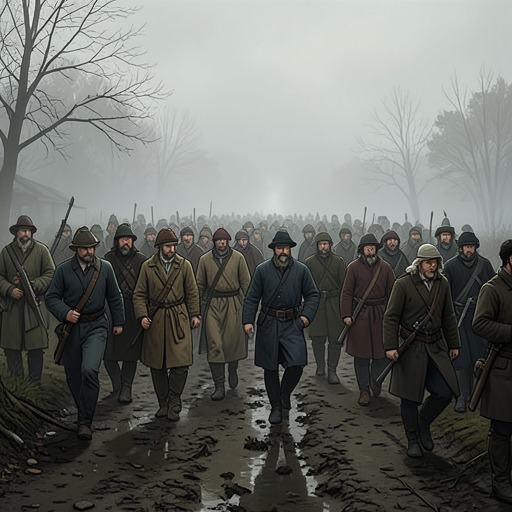
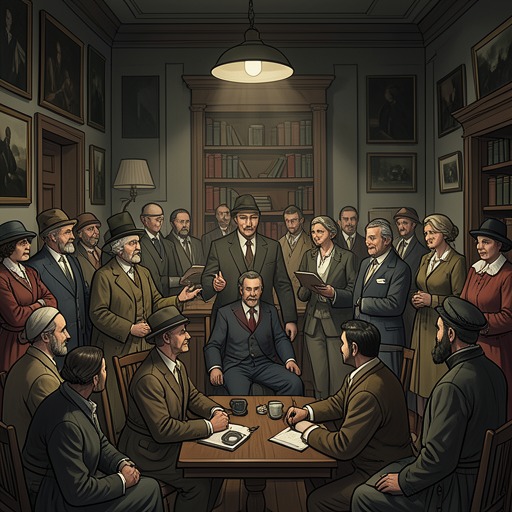
He illustrates the scale of that chain by describing people of different occupations and origins, including a restaurant proprietor from Italy and a schoolteacher from the American Middle West. Their separate lives, he says, eventually bring them together in a London court on a grey November day, where each has contributed a part to a murder trial. The formulation makes the courtroom another point of convergence: the account extends beyond the crime itself to the people and circumstances that carry its consequences into public view.
Small causes and converging lives
The force of Mr. Treves’s principle lies in the modest size of its examples. A kitchen maid’s quarrel with her young man leads her to leave her job; her next position makes her a principal witness for the defence. A temporary exchange brings Giuseppe Antonelli to England, where his sharp sight matters because his brother, whom he replaces, is blind. A constable’s interest in the cook at No. 48 makes him late on his beat. Each circumstance is ordinary in isolation; in Mr. Treves’s account, each alters what someone can witness or do.
He gathers these contingencies into the image of people “All converging towards a given spot ...” and names the moment when they meet “Zero Hour.” He then repeats “Towards zero ...” before shuddering. The repetition gives the idea a double character: convergence is an intelligible pattern when traced backward, but the approaching point also unsettles him. The expression describes both the construction of a mystery and the pressure created as its separate strands draw together.
Earlier circumstances disclosed in later scenes
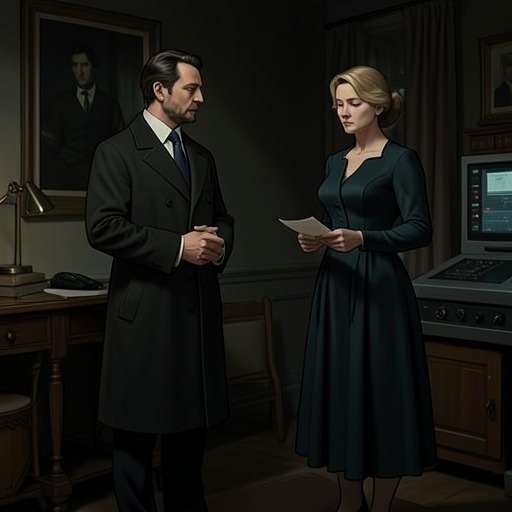
Later conversations in the novel show how a present confrontation can depend on events and assumptions that preceded it. When Lady Tressilian challenges Nevile Strange over a plan involving Kay Strange’s divorce and his possible remarriage to Audrey Strange, Nevile apologizes for the scene but insists that the rest is his business. The quarrel is not self-contained: its meaning depends on the prior marriages and the proposed changes to them, which the exchange brings into view.
The discussion of Sir Matthew’s will similarly turns an apparently simple reference to a wife into a question of chronology. Nevile clarifies that the bequest goes to Audrey, who was his wife when the will was made; the lawyer confirms that the later divorce does not alter the wording. The legal document preserves an earlier relationship in the present, making the timing of the marriage consequential even after the relationship has changed.
Battle’s follow-up about Audrey’s allowance adds another layer. Nevile says she persistently refused the money he wished to provide, while the lawyer describes the allowance as generous and confirms that Audrey returned it. The disagreement between a provision offered and one accepted or refused helps explain why the inheritance matters to Audrey. Here, as in Mr. Treves’s examples, a later conversation exposes the consequences of earlier arrangements rather than treating the present moment as self-sufficient.
The individual and the law
The principle also has a more personal, less investigative counterpart in Angus MacWhirter’s reflections after his failed suicide attempt. He inventories the circumstances he believes have brought him to despair—ill health, separation from his wife, unemployment, and lack of money or hope—and regards his action as a rational response to them. In hospital, he is preoccupied not only with survival but with the prospect of appearing before a magistrate for the attempt. His reasoning connects private losses to a legal consequence, showing how an individual life can be understood as a sequence of causes while also becoming subject to public judgment.
Across these examples, Mr. Treves’s formulation offers a way to read backward from a decisive event without reducing it to a single cause. The maid’s employment, a temporary exchange, a late constable, a contested marital plan, an old will, and a refused allowance belong to different kinds of circumstance, but each changes what follows. The mystery’s design depends on their convergence: what appears sudden at the point of crisis has a history.